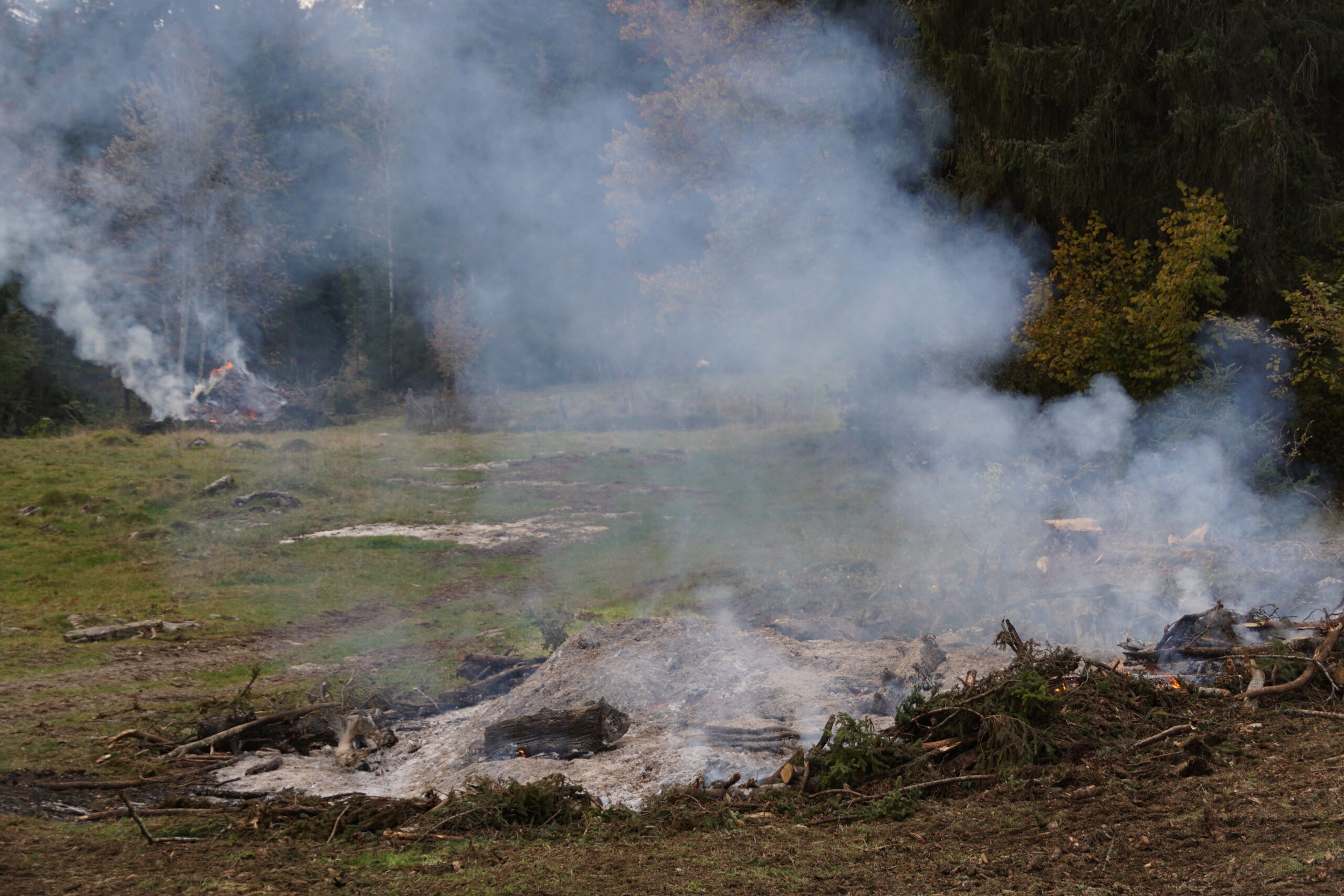
Wood burning doesn’t just emit toxic smoke, it also produces toxic ash
Ash from wood burning is often overlooked, but is a growing problem.
The problems with ash disposal include:
- Non-acceptance by landfill operators (due to issues of cleanliness, contamination, leaching of heavy metals, dust when uploading/depositing, potentially upsetting landfill stability, and the 30-year liability of Swiss landfills)
- Capacity (landfill availability, distribution and local bottlenecks, longer transport routes, extra costs of shipping from remote areas)
- Additional costs to the industry (landfill fees, retrofitting of systems for ash separation and future regulations for the processing of ash etc. plus, the costs of ash disposal that have almost tripled in some plants in recent years)
- The pollutants/toxins that ash contains.
Indeed, trees don’t just lock up carbon, they also lock up toxins… which are released when the wood is felled and burnt. Wood ash, even ash derived from untreated wood, therefore contains heavy metals and other concentrated pollutants which have been linked to cancer, soil and groundwater contamination as well as bioaccumulation in food chains of heavy metal(oids) which include chromium (VI); cadmium; lead; arsenic and mercury.
Pellets aren’t any cleaner. They can produce up to 8% ash which contains lime, magnesium oxide, potassium oxide, phosphate and sodium oxide, as well as heavy metals, such as copper, zinc, chromium, nickel and lead.
In Switzerland, ash is disposed of according to the Waste Ordinance (ADWO). As it cannot be spread on fields or disposed of in forests, it must be sent to the large waste burning plants as this diagram illustrates. Such waste incineration plants also burn wood directly—for instance Bern city’s behemoth uses 36% wood— and together, they produce 80,000 tonnes of various types of ash annually which must be disposed of safely. Grate/bottom/filter ash and dust therefore end up in domestic D landfills (for combustion residues) and E landfills (organic waste), though the ash must first be mixed with slag from waste incineration plants.
However the 20,000 tonnes of the most toxic fly ash (the fine-textured material deposited in boiler exhaust systems) produced annually is either exported, principally to German landfills, or treated domestically. As of 2020, 12 of the country’s waste burning plants and the company Chiresa AG were extracting 3/4 of the heavy metals contained via “acid washing” from fly ash. However the legal obligation to recover heavy metals from such ash which was supposed to start in 2023, has been postponed until 2026. Which means that the other 1/4 is being stocked without treatment because the authorities claim that the heavy metals it contains pose no threat to the environment or to humans!
It would anyway appear that the main reason for removing heavy metals in the first place is less to do with health and more to do with the circular economy and the recycling of zinc, lead and copper. Other solutions which Switzerland is pursuing is to incorporate the ash into cement and fertilisers, but the plants to do this are currently lacking and the market is deemed to be niche.
So, for now untreated ash is still being stocked in landfills in Switzerland or underground landfills in Germany, but Germany is tightening its disposal rules too.
And about time!
Read more here about pollutants produced when burning woody biomass.
November 2025