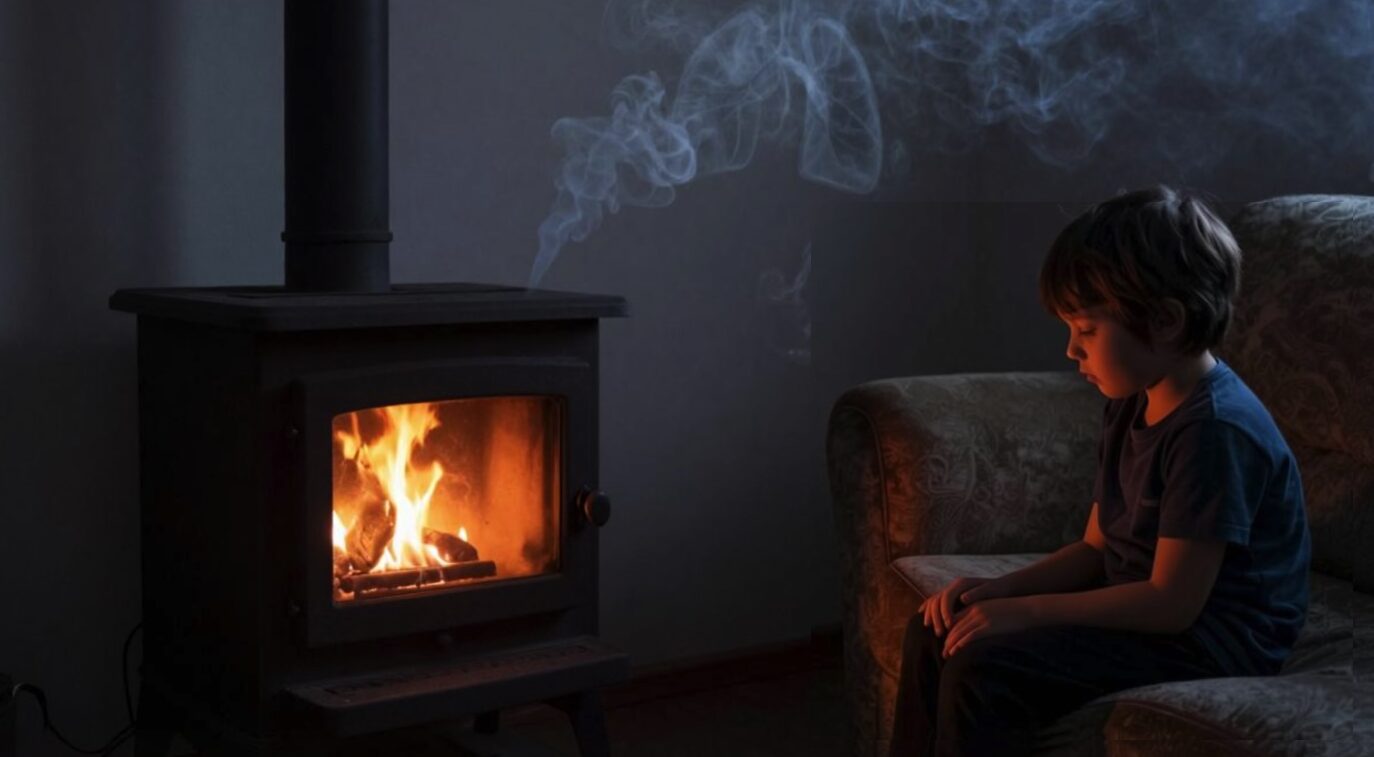
Time for warning labels? Why the case against wood burners is hardening this winter
As the nights draw in and temperatures dip, a familiar winter ritual begins. The strike of a match. The warm, comforting crackle of a fireplace.
But beneath that cosy glow lies a chilling reality that public health officials are no longer willing to ignore. A steady wave of international research is hardening the medical consensus against domestic wood burning, exposing it not as a harmless lifestyle choice, but as a major driver of chronic illness and premature mortality.
The culprits are toxic microscopic pollutants, primarily fine Particulate Matter (PM2.5) and Polycyclic Aromatic Hydrocarbons (PAHs). PM2.5 particles travel deep into the lungs, cross into the bloodstream and can even breach the blood-brain barrier. Meanwhile, PAHs are carcinogenic compounds linked to delayed cognitive development in children. Prolonged exposure to these emissions contributes to cardiovascular disease, stroke, severe respiratory illness, cancer and dementia, while causing lung capacity to deteriorate at up to double the normal pace as people age.
As reported in The Guardian, fresh European research measuring air in schools, sports centres and homes reveals that children’s exposure to PAHs from domestic wood-burning can rival traffic exhaust. Urban areas with widespread wood heating, such as Colchester and Athens, recorded the highest PAH levels—breaching World Health Organization guidelines—whereas cities where wood-burning is not practised, such as Barcelona and Lisbon, saw the lowest. Inside Colchester homes, winter levels of high-molecular-weight PAHs surged over 10 times higher than in summer, while in some Greek towns winter PAH levels soar up to 100 times above summer levels.
The broader European toll is staggering. Across the EU, residential solid fuel burning generates 62% of all PM2.5 emissions, making it the top source of particle pollution in over half of European cities. In Switzerland, wood burning generates 16% of all fine particle pollution annually—out-polluting national road traffic. During winter smog episodes, research by the Paul Scherrer Institute found wood burning accounts for 70% to over 80% of organic fine particulate matter as inversions trap smoke in alpine valleys. So much for crisp Swiss mountain air.
Faced with these numbers, the political response across Europe is shifting toward outright prohibition. Over 650 French towns and cities—including Lille, Lyon and Strasbourg—have outlawed open-hearth fireplaces with fines up to €1,500, while alpine regions are phasing out pre-2002 enclosed log burners.
As industry lobbyists use green loopholes to frame wood burning as “clean,” health officials are pushing back. They want cigarette-style warning labels on stoves and fuel so buyers understand what they are actually bringing into their living rooms.
Before striking that match for winter comfort, perhaps it’s time to rethink the true cost of that ambient glow.
Posted: November 2026