Timber, spin and TV: the greenwashing of Swiss forestry
Welcome to Schweizer Radio und Fernsehen (SRF), where intensive industrial logging gets a cozy, “slow-journalism” makeover.
In a touching, recent broadcast, SRF sends two forestry engineers into Basel’s woods to play “eco-detectives.” It is a masterclass in emotional manipulation: frame chainsaws as a rescue mission, cue sad music for thirsty beech trees and ignore the roaring biomass subsidies in the background. It isn’t journalism; it’s a public relations shield for the logging industry.
Here is the raw, scientifically backed pushback to that narrative, without the PR filter:
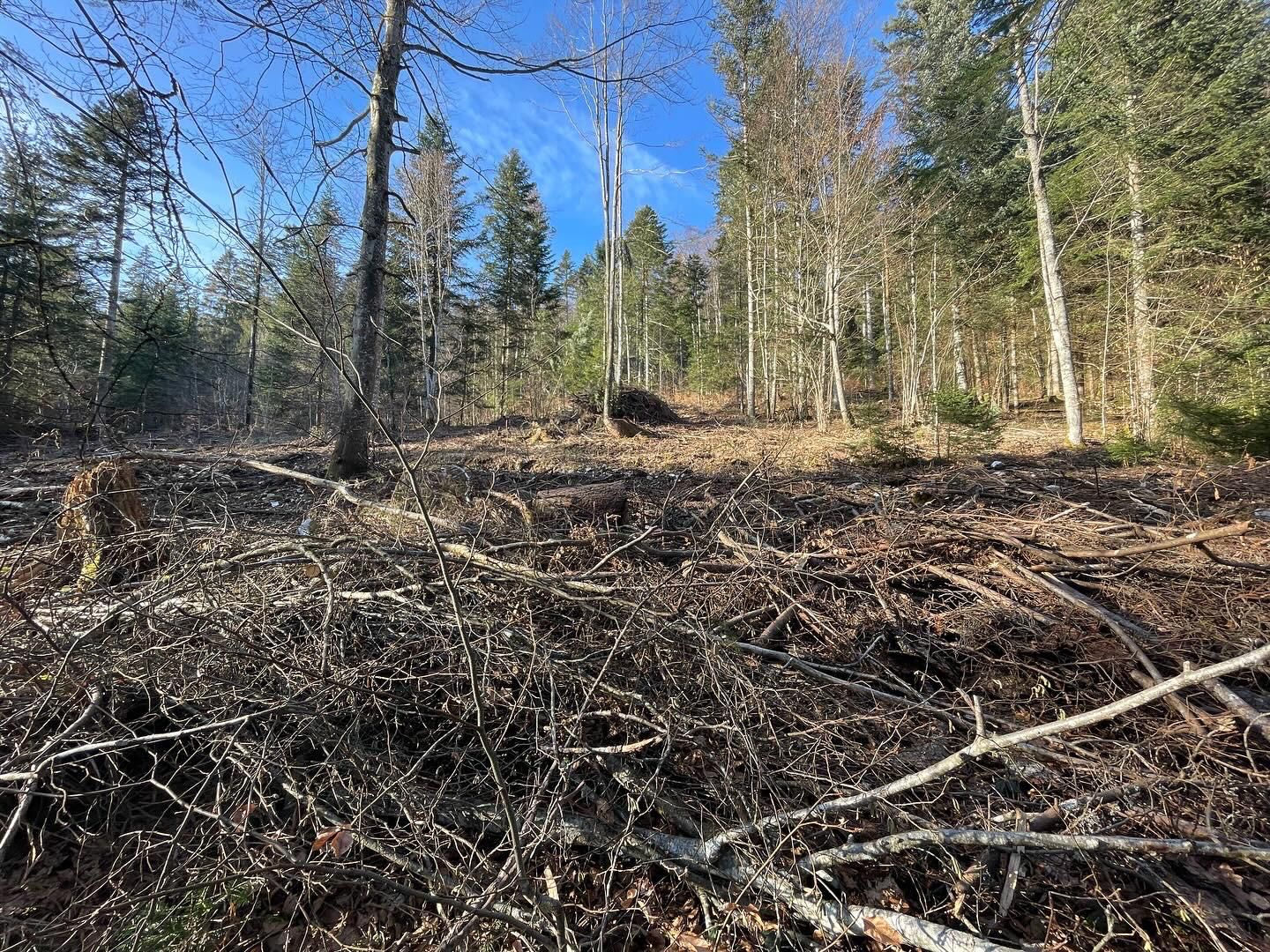
Volumetric gaslighting: The program blames a timber stock drop in the Hardwald (from 300m³/ha to 180m³/ha over 15 years) entirely on climate change. Trees do not evaporate. Machinery removed that missing 120m³/ha. Across the Jura region, official data now shows total wood drain (harvesting + mortality) surpassing natural regrowth by a whopping 124.2% (see page 61). Blaming the canopy shrinkage solely on weather shifts accountability from active logging to global warming.
Baking the microclimate: The “experts” enthusiastically suggest promoting “climate-resilient” oak and pine to replace 140-year-old beech trees. But to replace a mature forest, you must first cut it down. Old forests maintain cool, humid microclimates. Razing them destroys canopy shade and obliterates the mycorrhizal networks in the soil, introducing light, heat, and wind—accelerating localised aridity in a country warming at twice the global average rate.
The “carbon debt” greenwash: SRF omits where this timber goes: straight into biomass burners. In 2024, an astonishing 44% of harvested Swiss wood was burned directly for energy—including 75% of all logged deciduous trees. Burning wood releases more CO₂ per unit of energy than coal. Burning massive beech trees instantly dumps stored carbon into the atmosphere, creating a severe carbon debt taking 80-100+ years to repay.
Squandering the Swiss advantage: A landmark 2026 study reveals 94% of Europe’s forests are locked in rigid, uniform structures. Switzerland holds the continent’s most diverse baseline, with single-species regular classes limited to 35.8% (compared to 79.9% for Spain). Replacing old, diverse forests with uniform rows of “heat-resistant” crops simply adopts the failed European forestry model, stripping the country of its ecological edge.
Starving the ecosystem: The broadcast normalises the loss of old trees, completely ignoring the devastating ecological fallout. According to another study published this month, large, senescent trees are the absolute lifeblood of forest biodiversity, directly sustaining wood-dependent beetle communities and creating vital breeding territories for species like the white-backed woodpecker. By framing the removal of these dying giants as “forest maintenance,” SRF glosses over the fact that a managed, young timber crop breaks the food chain and collapses the entire ecosystem.
This is a commercially driven liquidation of mature forest capital masquerading as environmental adaptation. When we cut down these established beech forests, we aren’t just losing old trees—we are sacrificing ecosystem resilience, obliterating biodiversity and crippling our actual ability to fight climate change.
Our public media must do better. Instead of broadcasting uncritical corporate PR, journalists have a duty to interrogate the data, challenge industry narratives and provide the objective truth that the Swiss public deserves.
June 2026