The Swiss climate strategy: if you can’t beat the heat, burn the trees
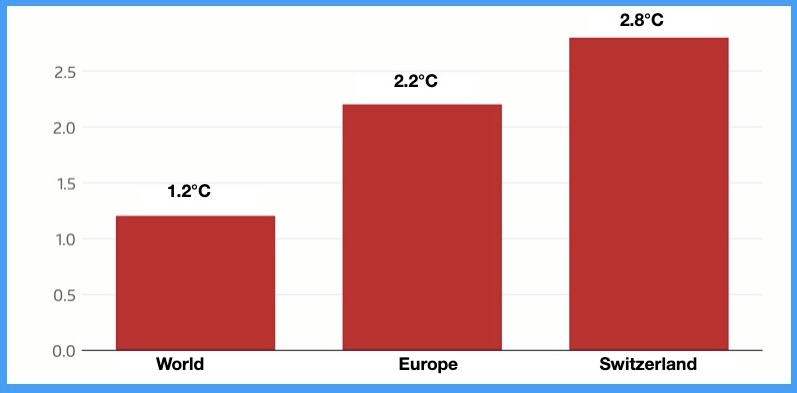
Switzerland is currently busy doing “too little” against climate change, while being hit twice as hard by the consequences. Apparently, warming up at double the global rate isn’t quite enough to trigger meaningful domestic action.
While the rest of the world has seen a 1.5°C rise since the pre-industrial era, Switzerland has surged by almost 3°C, according to a new study by the Swiss Academies of Arts and Sciences. Experts attribute this to parched soils and disappearing snow. Even the “perk” of cleaner air has backfired, allowing more heat to radiate onto a surface that is already baking.
The government can’t exactly claim it wasn’t warned. A group of over 2,000 senior Swiss women (aka Climate Grannies), spent nine years arguing that the state’s inaction was a literal threat to their lives. After being told by Swiss courts to basically go home and knit, they took their complaint to the European Court of Human Rights which ruled in their favour two years ago.
The latest study essentially reaffirms that judicial slap on the wrist—which the Swiss Parliament voted to ignore—merely swapping legal jargon for scientific data to deliver the same uncomfortable truth: Switzerland is an expert at importing goods and exporting its CO₂ responsibility. To meet 2030 targets, the plan isn’t to stop emitting, but to buy enough foreign carbon “indulgences” to make the domestic statistics look green.
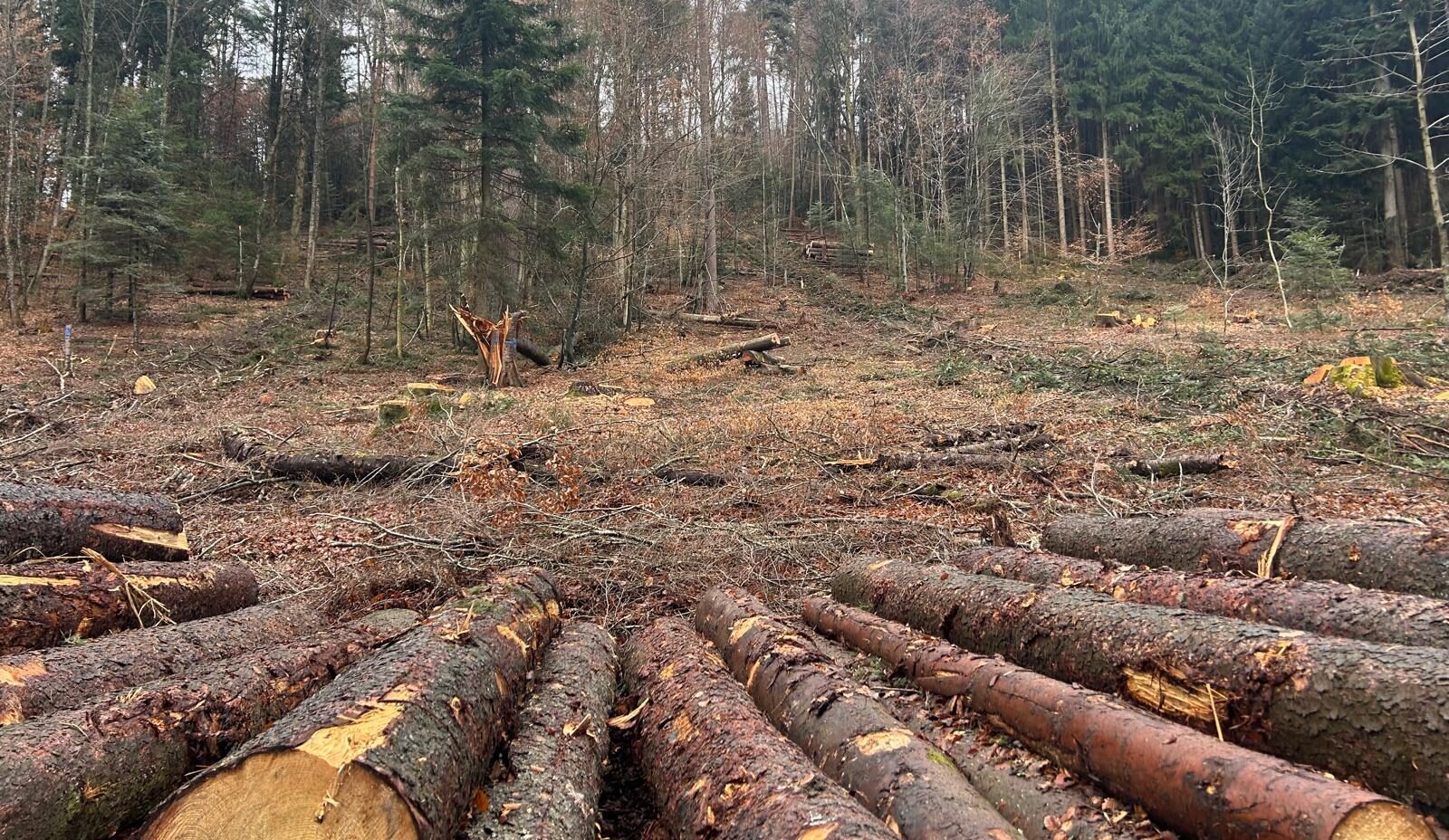
Meanwhile, the government is touting woody biomass as a “miracle” fix, ignoring warnings that burning trees is a carbon disaster. In a masterstroke of tone-deaf marketing, the Emmental region has retreated into its own echo chamber to brand energy wood the “Oil of Emmental.”
Because nothing says “climate protection” like campaigns featuring Swiss men dressed as Arab sheiks carrying chainsaws, a bizarre bit of cultural appropriation used to signal that our “black gold” grows on trees.
To ensure our forests are “fit” for the future, the current trend involves aggressive interventions that look suspiciously like industrial logging. It’s a brilliant loop: we clear-cut forests to make them “climate fit” and burn the logs for heat. We call it “carbon neutral” because—theoretically—another tree might grow back in fifty years. This wood-fired logic is being pushed as a saviour, even though burning it can release more CO₂ than the fossil fuels it replaces.
While we hit the financial and technical limits of adapting to extreme weather, the political response remains fixated on “technological shifts” involving chainsaws.
The 60 authors from the Swiss Academies of Arts and Sciences argue that the financial sector is still asleep at the wheel. They suggest redirecting investments into actual green infrastructure.
But as long as burning our carbon sinks is subsidised as “clean energy” and marketed with sheik-costumes, real change remains as elusive as a Swiss glacier in July.
Other findings:
- Heatwaves: more frequent and intense since 1901
- Cold: up to 60 fewer frost days since 1961
- 0°C isotherm: has risen by 300 to 400 m since 1961
- Growing season: extended by 2-4 weeks since 1961
- Snow days: reduced by 50% below 800 m and by 20% at 2000 m since 1970
- Heavy precipitation: 12% more intense and 26% more frequent since 1901
- Drought: significantly drier summers since 1981
April 2026