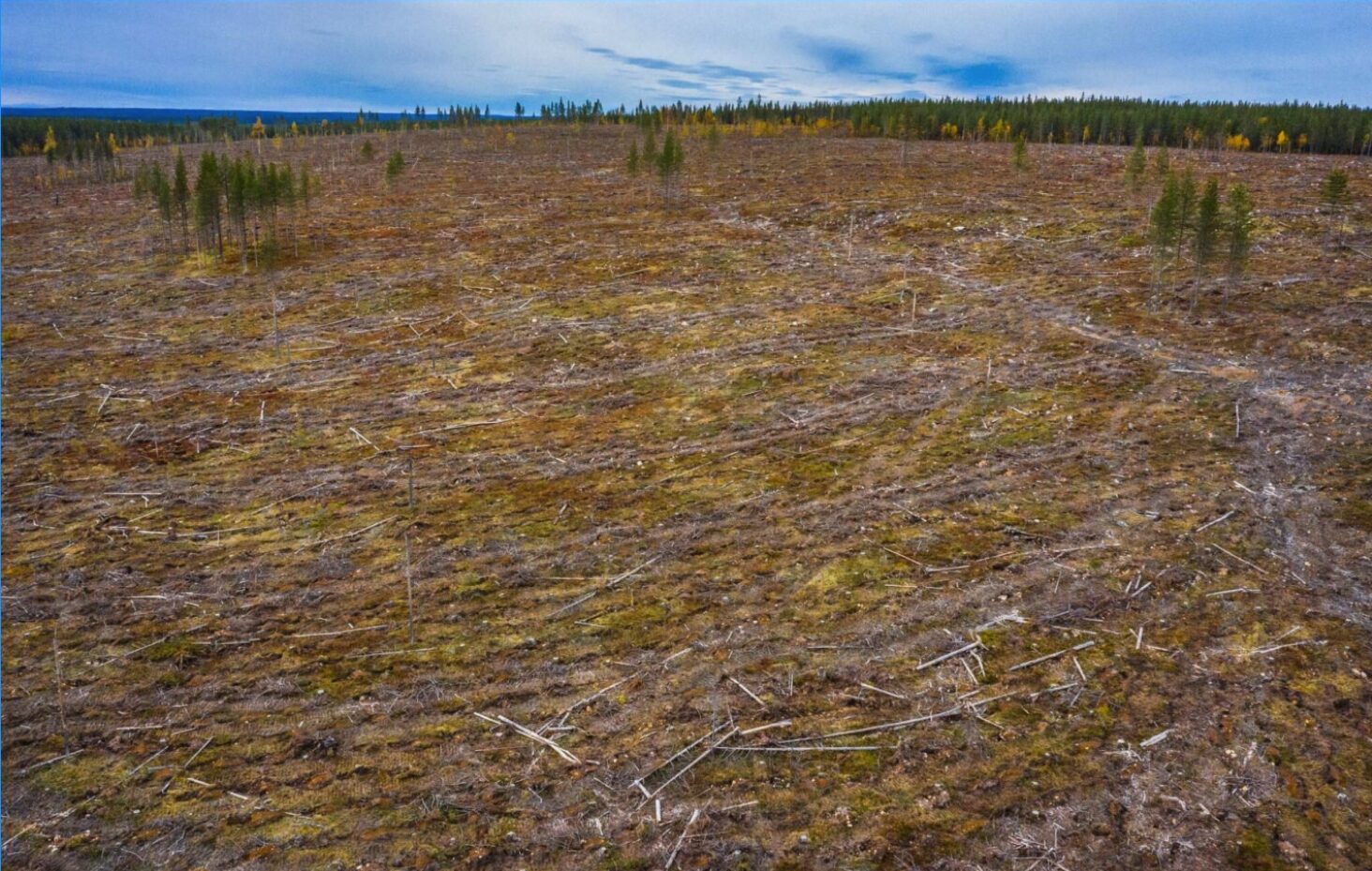
The failure of the industrial forestry
One of the excuses often used in Europe to justify logging home-grown trees is that it prevents the types of exploitation and abuse of forests and workforces seen in countries with laxer legislation. Our forestry and labour laws are strict and adhered to, the argument goes, especially in Europe’s Nordic countries whose forestry model is admired the world over for combining “productivity with strong environmental responsibility.”
But greed is universal.
And serious allegations have been levelled against Swedish and Finnish forestries in recent months, as Fern and Kelsey Perlman report.
This October, Nestlé dropped a bombshell by announcing its decision to stop importing virgin paper fibre from Sweden’s SCA, Europe’s largest private forest owner, due to “sourcing controversies” including threats to biodiversity and Indigenous Sami lands, as well as clearcutting and degrading high conservation value and old-growth forests.
In November, in neighbouring Finland, the mainstream Helsingin Sanomat newspaper uncovered a human trafficking scandal involving some 200 people, many from Nepal, enticed with false promises and exposed to poor working conditions and non-payment of wages. The companies involved include the well known Metsä Group and even State forest owner Metsähallitus.
Nor are these isolated cases. Occupational injuries and the exploitation of forestry workers are shockingly common, including in Sweden.
The Nordic forestry model is broken.
Profit margins are dwindling as is the sector’s workforce, while demand and harvest volumes keep increasing, threatening long-term environmental and social goals. Carbon sinks are down sharply in Sweden and Finland’s forest became a net emitter in 2021.
Yet both governments continue to call for EU standards and climate targets to be lowered to protect their forestries’ “cultural and social contributions”. Instead of blaming climate change and the war in Ukraine, they should instead reappraise a system that, to quote Fern, “prioritises volume over value, short-term extraction over long-term sustainability and political influence over accountability.”
In 2020, 3/4 of Europe’s forests were managed through clearcutting and over half the wood was burnt (Sweden burns 80%) while much of the rest was pulped. We cannot keep this up. Wood is too precious a commodity.
Neither can we weaken climate targets or let economic interests undermine human rights or the integrity of our forests. We must urgently transition to a more sustainable model that prioritises the cascade use of wood.
But the European Commission is hell bent on “prioritising competitiveness” and only has ears for those who carry big sticks and political clout.
Money corrupts. Absolutely.
If we cannot trust the world renowned Nordic forestry model, why should we trust any other?
We shouldn’t.
Industrial forestry as a whole is flawed and failing.
January 2026
Photo: Marcus Westberg