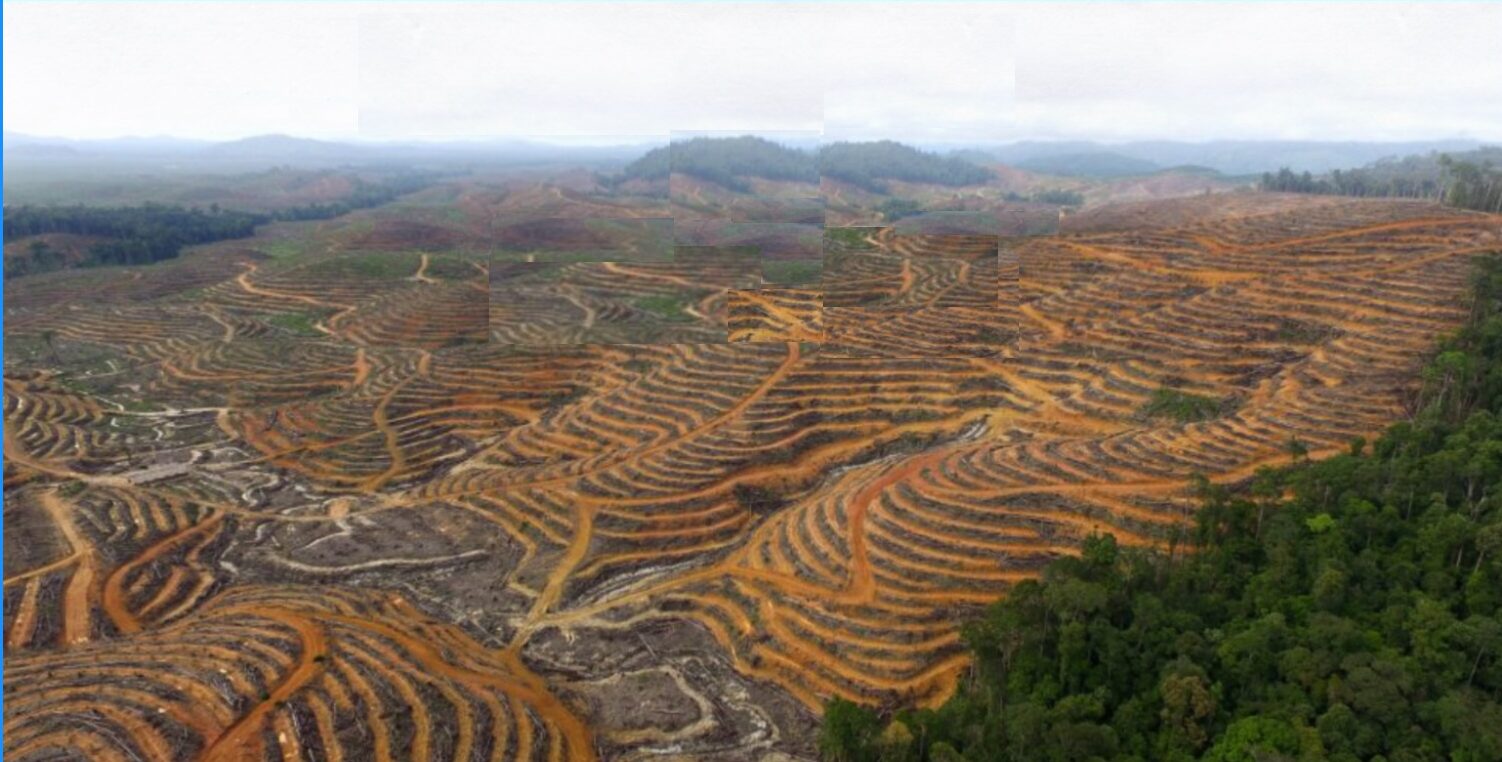
Indonesian floods and deforestation
The floods and landslides that hit Indonesia in late November did not come out of a clear blue sky, but result from an ecological crisis decades in the making. They destroyed over 100,000 homes and countless other buildings and infrastructure, and displaced some 1.2 million people. As of Monday, 15 December, they had claimed the lives of 1,030 people, with 206 people still missing, Reuters reports.
They could also spell the death knell for the world’s rarest primate, the Tapanuli orangutan. Less than 800 of these critically endangered great apes remained in the wild, according to The Guardian, but up to 54 are thought to have perished in the floods in what has been described as an “extinction-level disturbance for the species”.
Countless other animals both wild and domestic were washed away. The government was quick to blame “an extremely rare” weather phenomenon until images of piled up trunks and timber went viral on social media, after which it quickly pledged to investigate logging permits, review forest governance and prosecute any would-be violators.
Humans did most definitely have a hand in this tragedy.
The monsoon rains and Cyclonic Storm Senyar massing over the Malacca Straight dumped over 1,000 mm of rain in just four days. World Weather Attribution has calculated that this extreme rainfall “corresponds to roughly a 1-in-70-year event in today’s climate” and that rainfall in the area had increased in intensity by 9-50% due to anthropogenic climate change.
Deforestation, poor forest management, illegal logging and mining, pulp-wood farms and the rapid expansion of palm oil plantations helped exacerbate matters.
The Island of Sumatra has lost some 4.4 million hectares (ha) of forest since 2001. In the flood-affected areas of Aceh, North Sumatra and West Sumatra, around 1.4 million ha of forest were razed between 2016-25. It’s no surprise to learn that the hardest hit areas were degraded watersheds according to the Indonesia Environmental Forum (Walhi), which goes on to warn that, from 1990 – 2014, around 158,000 ha of forest were cleared for palm oil plantations.
Indonesia is the world’s largest palm oil exporter and Sumatra produces more palm oil than any other Indonesian island. Expanding plantations have, in the last 20 years, been responsible for the loss of 1/3 of the country’s old-growth forest.
China, India and Europe are the largest importers of palm oil for use as biodiesel, and in food products and the oleochemical industry. Domestic consumption is also growing.
Floods, storms and torrential rain fuelled by global heating are increasing in intensity in Europe. In 2024 they affected 413,000 people and almost a third of the continent’s river network. These floods aren’t just “natural” disasters but an ecological crisis years in the making.
Firstly, deforestation contributes to global warming, among other things. Secondly, deforestation leaves humans and animals even more vulnerable to extreme weather events (torrential rain, flooding, landslides, drought, aridity, heat, etc.). And still we go on cutting down forests.
Indonesia alone plans to open up 20 million ha of forest for food and energy.
Dezember 2025
Photo: Walhi