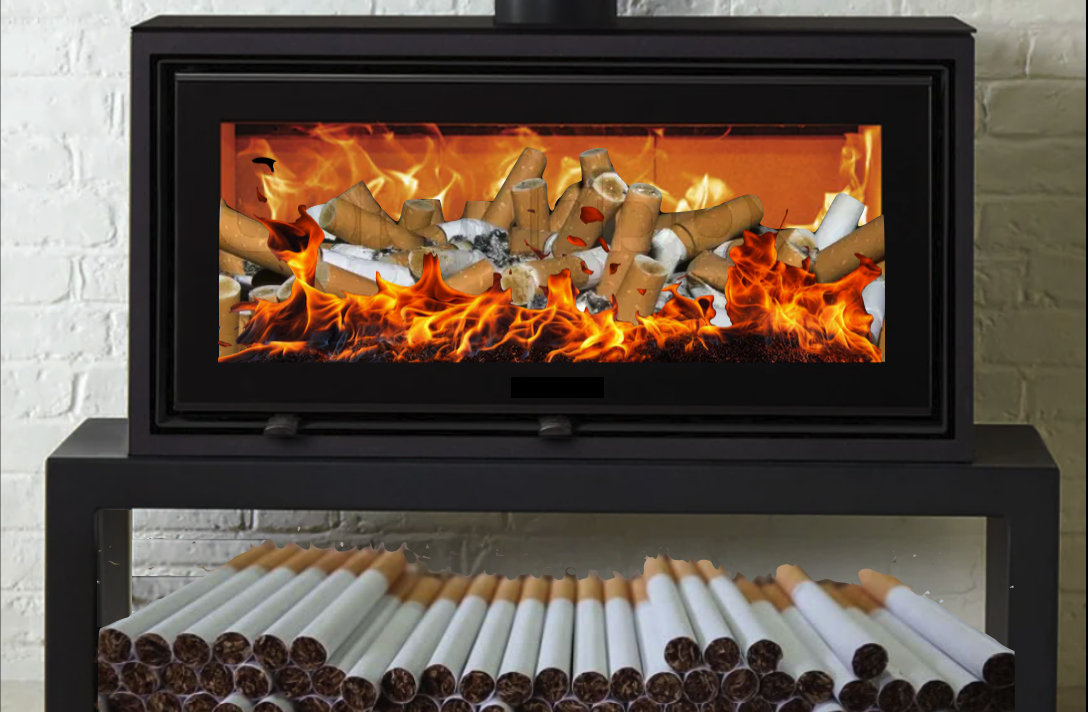
Debunking wood smoke’s squeaky clean image
Remember when you could smoke literally everywhere? Cinemas, restaurants, planes and even hospital waiting rooms were filled with a fug of toxic fumes. Doctors had a predilection for Camels, Pall Malls proved a particularly welcome gift for Christmas and rugged Marlborough Men galloped off into the sunset propelling the brand to the world’s number one spot.
The tobacco industry produced some of the world’s most memorable and successful ad campaigns. And it proved a past master at cozying up to politicians, manufacturing doubt, sowing misleading claims and legitimising products whose health risks it knew about very early on.
Smoking was sexy and non smokers quite literally had to suck up secondhand smoke.
Today we know the risks associated with tobacco, just as we know that passive smoking is bad for all those exposed to it, especially children. Yet we continue to think of kids crowded around campfires roasting marshmallows as desirable if not downright wholesome. Wood-burning stoves and fireplaces are likewise romanticised and inexorably interwoven with end of year festivities, family, warmth, hygge and happiness.
But smoke is smoke. Burning plant material—be it leaves or wood—produces carcinogens, mutagens and teratogens that cause and exacerbate serious health problems, increasing the risk of premature death, according to Doctors and Scientists Against Wood Smoke Pollution.”
Wood smoke just contains more of them. It is 30 times more likely to cause tumours than cigarette smoke and its toxic free radicals remain active 40 times longer.
An outdoor fire pit has been shown to emit the same magnitude of fine particulate pollution as 800 cigarettes.
Burning wood for just one hour releases the same deadly chemicals as smoking 6,000 packs of cigarettes. Use your log burner to heat your home for one week and you could be releasing more noxious emissions than smoking a million cigarettes.
So why isn’t this common knowledge? Because the wood burning industry has burnished its image to a squeaky clean sheen by adopting the same tactics as the tobacco industry (and fossil fuel sector) before it.
False claims are made, doubt sowed and figures fudged. Comparing so called eco-wood burners to open fires and old stoves creates a false sense of security even though the former are much more polluting than a gas boiler and 650 times more polluting than a modern HGV truck.
Persuading consumers to switch to “cleaner” eco-stoves mirrors the tobacco industry’s push for smokers to switch to “less hazardous” low-tar and low-nicotine cigarettes. A sleight of hand that also makes the industry part of the solution, not the problem.
Meanwhile, behind the scenes and behind people’s backs, the industry weakens and whittles away at regulatory controls, negotiating exceptions for its products, running emissions certification schemes and influencing or infiltrating the departments set up to regulate it.
There is no safe level of wood smoke exposure.
November 2025