A forest is more than a climate-control dial
Everyone loves planting trees. From local activists to global politicians, reforestation is the poster child of climate action, backed by movements like the One Trillion Tree Initiative.
But curb your enthusiasm, for “Not every forest cools the Earth”.
So concluded a team of researchers from ETH Zurich who ran simulations on the department’s supercomputer to model three global reforestation scenarios and their cooling effect on the climate.
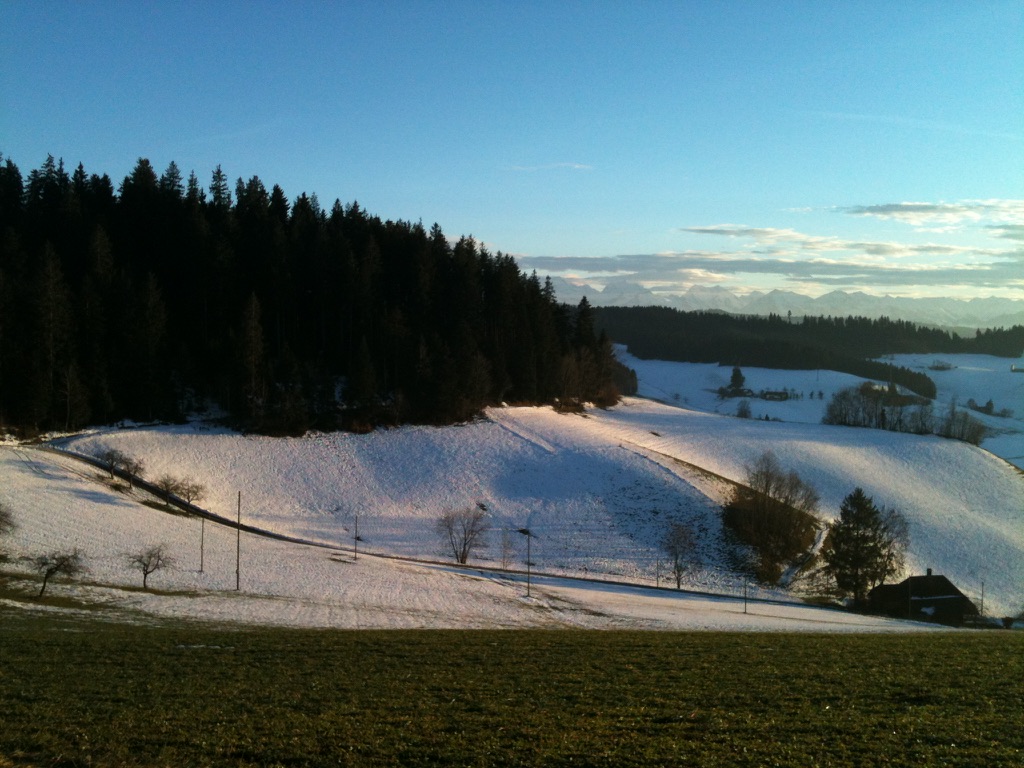
After churning through 300 terabytes of data, they found that while trees are carbon sponges, their dark canopies can also act as “heat traps.” This effect is especially pronounced in northern latitudes where conifers create a warming effect by lowering the albedo—a measure of how much sunlight a surface reflects—soaking up solar heat that pale, reflective snow or grass would otherwise bounce back into space.
The study found that focusing planting in the tropics delivers far greater cooling. By targeting the Amazon and Africa, we could achieve the same global climate benefits using 450 million fewer hectares than less strategic approaches, the authors argue.
But this framework offers a significantly incomplete picture. Relying on narrow temperature models risks ignoring the complex ecological and human realities that make a forest more than just a climate-control dial.
Reducing forests to “cooling machines” is simplistic. Trees drive transpiration and cloud formation, creating ripple cooling effects far beyond their own canopy. By chasing “thermal hotspots,” we risk incentivising fragile monocultures and destroying ancient, non-forest sinks like savannahs and peatlands. True resilience depends on diverse, native ecosystems that sustain the global water cycle—not just a carbon-first spreadsheet.
We cannot confuse a regional “albedo sprint” with the global “carbon marathon.” The study’s focus on local surface temperature overlooks the global nature of the climate crisis. Even if a high-latitude forest slightly warms the local ground due to its low albedo, it still performs the critical task of long-term carbon sequestration. Removing CO2 from the atmosphere benefits the entire planet’s energy balance over centuries, whereas albedo effects are localised and immediate.
There is a high risk of green colonialism. Treating the Global South as a carbon sink allows northern polluters to outsource their climate responsibilities to the tropics. This shift can trigger land grabbing and the displacement of indigenous communities, potentially sacrificing local food security and traditional rights for the sake of global cooling targets.
And last but certainly not least, the search for a perfect location leads to analysis paralysis. Planting a diverse, native forest in a sub-optimal spot is far better than waiting for a perfect blueprint while the planet warms. We must also be wary of unscrupulous lobby groups misusing this data to justify even more logging. With forests in places like Switzerland already being misguidedly clearcut to make them “climate-fit,” the albedo effect offers a fresh excuse to ramp up logging under the guise of local cooling.
Forests should be valued as living ecosystems that sustain life, not just carbon sponges to be moved around a map.
March 2026