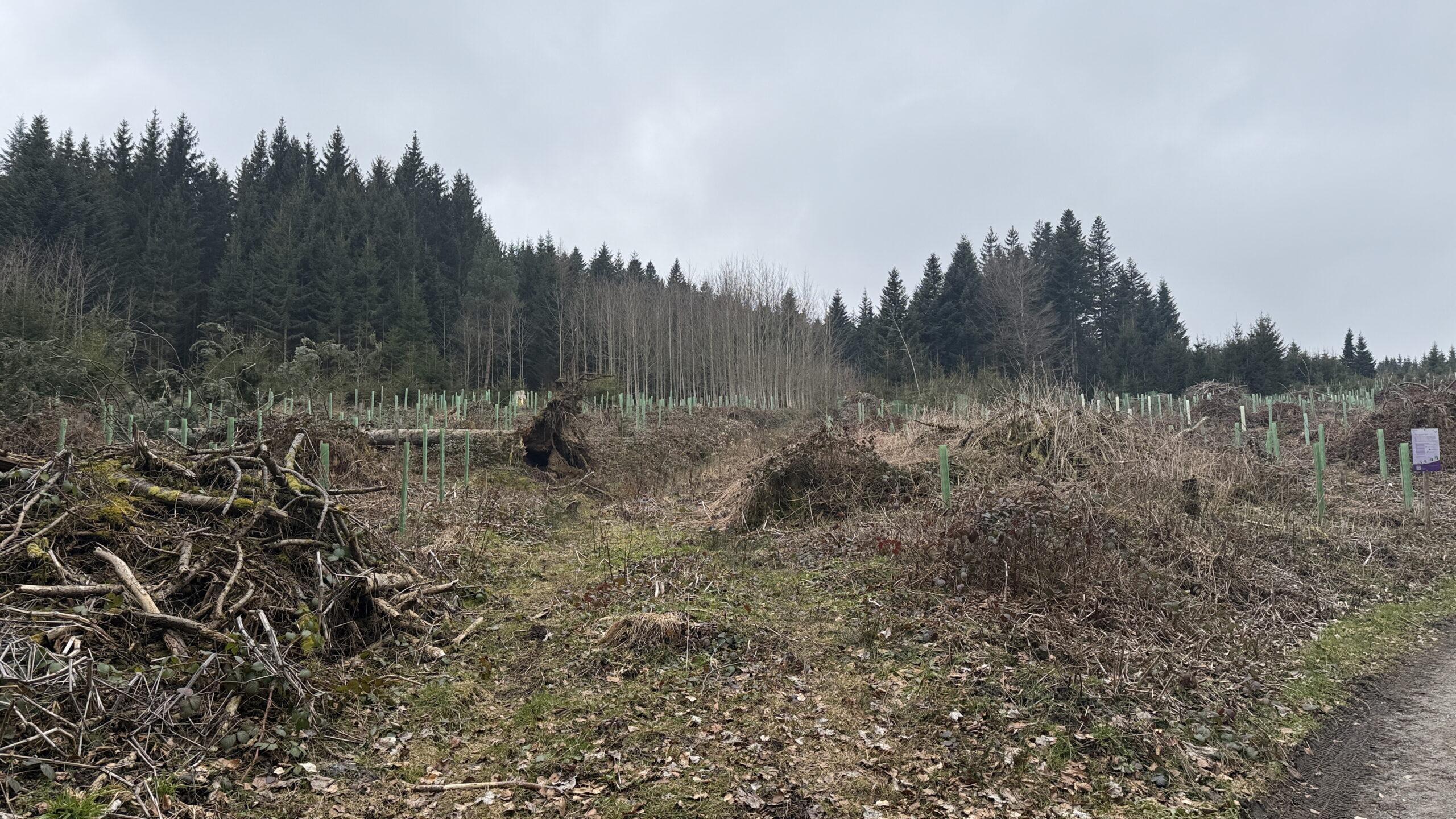
Subsidising clearcutting to create “climate resilient forests”
Take a forest. Clearcut it. Replant with “climate resilient” species. And presto. Problem solved.
Or so some cantons will have you believe. Indeed, a number of them are offering forest owners generous subsidies to replace their existing forests with “rejuvenated forests adapted to climate change”.
The Burgergemeinde Bargen, in the canton of Bern (pictured) accepted the challenge in 2024, clearcut a section of its forest and received CHF 18,000 in return. But the canton isn’t stopping there and intends to subsidise the clearcut of an area the size of 500 football fields so that it can experiment with creating “climate-adapted” Bernese forests and “preserve their vitality in order to guarantee the long term forest services which the public demand.”
How very thoughtful.
There is though a slight fly in the ointment… or could that be a woodworm in the woodwork?
Natural ecosystems, be they wetlands or woodlands maintain themselves. They are self-organising, self-regulating and therefore self-sustaining and do not require human intervention.
Logged forests by comparison are artificial systems where these natural processes have been interrupted. The brittle, exposed ranks of the replanted trees in their plastic tree guards and the brittle, exposed soil in the above photo have nothing in common with the complex mixed forest which they replaced. Not only that, but clearcutting causes particularly large emissions of CO2 and it can take almost two decades for clearcut forests to stop emitting CO2 and actually start compensating for CO2 losses. Moreover, if the cleared forest consisted of hardwood, then you can be pretty sure it was burnt because two thirds of our precious hardwoods are now going up in smoke.
Yet logging and clearcutting are now being prescribed to actually “improve forest health” or, to use the latest catchword, to “promote forest resilience” in the face of climate change.
You couldn’t make it up if you tried.
And here is another woodworm for you.
“Resilience” is a scientific term which simply means the time which an ecosystem requires to regain its structure and composition (its mix of tree sizes, ages and species in the case of a forest) and function (its nutrient, energy and carbon cycles for example) after a disruption.
Logging lowers resilience, but the canton is not listening to science. It is listening to the professional forestry and the biomass industries which have always been concerned first and foremost with timber exploitation.
August 2026